Brazil's Football Crisis: A Reflection of a Nation's Turmoil
Brazil’s national sport is a mirror to a fractured society gearing up for elections amidst a crisis of faith in democracy.
Let’s be clear: the controversy involving Flávio Bolsonaro, a front-runner for the presidency, and Richarlison over a supposed stolen island is bizarre, to say the least. There are legal battles, wild accusations, and frankly, this column isn’t equipped to navigate the murky waters of land ownership disputes between politicians and footballers. We’ll leave that to others, like we did with the odd spat between Rodrigo Duterte and Vincent Janssen over a Pacific island.
Richarlison claims he bought an island near Rio de Janeiro and has proof to back it up. According to him, Bolsonaro tried to purchase the island but when Richarlison refused, a lawyer named Willer Tomaz swooped in and annexed it. “These guys took the island without spending a penny, as far as I know,” Richarlison said in an Instagram video that has garnered over 31 million views. Tomaz counters that Richarlison is deceiving the public, asserting that he has a registered public deed. Bolsonaro has denied any involvement, calling Richarlison's claims politically motivated.
This oddball incident is just a glimpse into a Brazilian election that’s become a circus—filled with drama, division, and a dizzying amount of misinformation. “Brazil is now a dystopian place,” remarked Renan Santos, a candidate who didn’t make it past the first round. “People don’t discuss policies; they just create entertaining content about politics.”
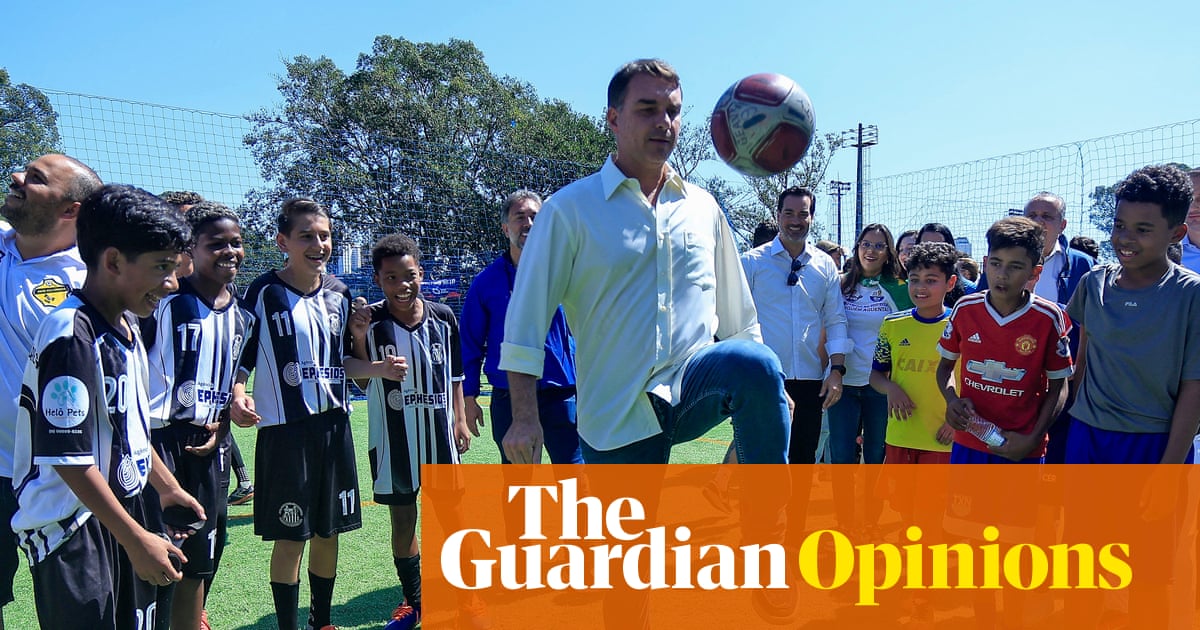
And true to form, football has taken center stage in this election. Flávio Bolsonaro’s father, Jair, made it a point to politicize the iconic yellow national team jersey, using it as a campaign symbol and donning it at rallies. Several football stars, including Neymar and Ronaldinho, have either openly or subtly supported his cause.
This connection can partly be traced to the Bolsonaros’ strong appeal among Brazil's evangelical Christian community, which boasted 20 of the 26 players in the World Cup squad this summer. Many belong to a commercially-driven brand of evangelism that thrives on flashy TV preachers and megachurches, emphasizing individual success as the path to personal fulfillment.
The young urban men who rally behind the Bolsonaros often overlook the social safety nets and wage increases offered by current President Luiz Inácio Lula da Silva. Instead, they dream of entrepreneurship and social media fame, viewing society as a competitive arena rather than a collective struggle.
In this context, Neymar isn’t seen as a cautionary tale of wasted potential but as a figure to aspire to—a man who achieved immense wealth and fame while living life unapologetically. Neymar has previously endorsed the younger Bolsonaro in this election, aligning himself with a similar ideology.
However, the real contention in this election isn’t just about players but the clubs themselves. Lula’s recent ban on sports betting has sparked outrage among Brazilian football circles. With around 7% of the population struggling with gambling addiction, this ban hits hard in a country where betting is a vital revenue stream. Many clubs prominently feature betting companies on their jerseys, and players like Neymar and Vinícius Júnior earn significant income from endorsements in that sector. Flamengo’s president lamented on a podcast, “How am I going to pay for [Lucas] Paquetá?” Bolsonaro has criticized the ban and hinted at reversing it if he wins.
At its core, this election raises the same questions that football has faced for years. Is the sport a team effort or a showcase for individual talent? Is it merely about the thrill of victory and personal glory, or can it also foster civic pride and inclusivity?
Brazil, in its current state, is particularly attuned to these challenges. The nation feels stuck in a cycle of decline, with 2022 marking nearly three decades since its men’s team last lifted the World Cup. The country lacks a unified youth development system and has seen eight presidents of the national federation since 2012. Football, once a unifying force, now feels fragmented, reflecting a society of individual entrepreneurs scattered across the globe.
We often hear that football can unite a nation, but perhaps we underestimate how deeply it can also highlight the divisions within.