
Japan's Game Changers: How the JFA Academy Elevates Women's Football
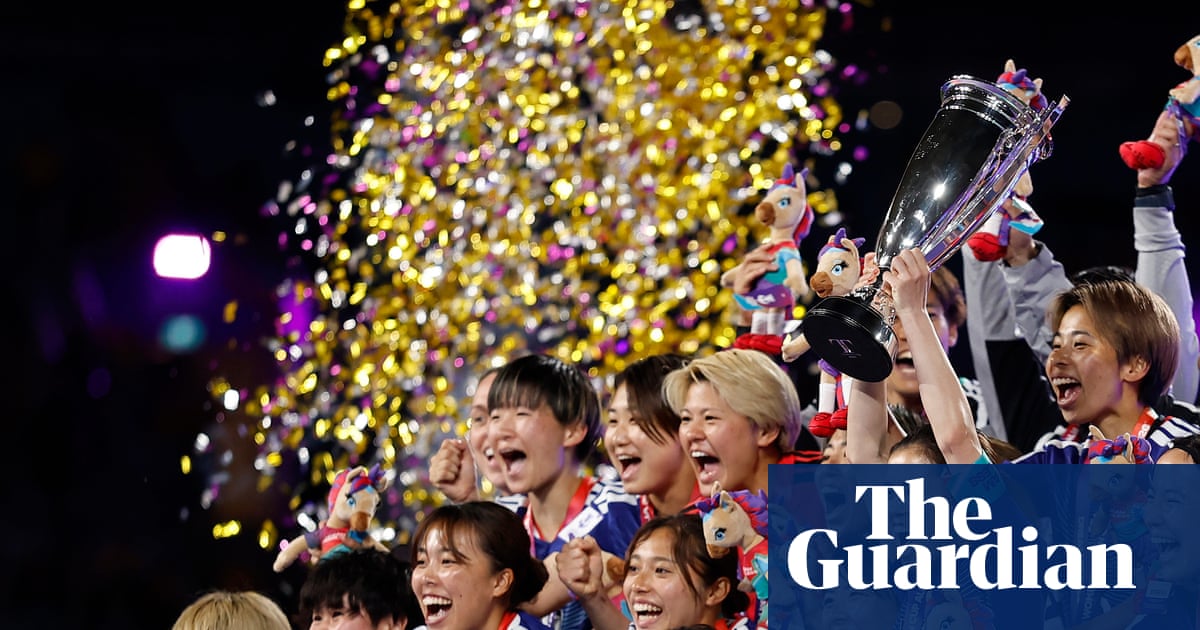
Japan's women's football team consistently defies expectations, showcasing their prowess not just in Asia but on the world stage as well.
Having clinched the Women’s World Cup in 2011 and reached the finals again in 2015, Japan has established itself as a formidable force. While they haven't replicated that World Cup glory recently, they did secure the Women's Asian Cup this year under Nils Nielsen, now succeeded by Michihisa Kano. Notably, many of Japan's top stars are plying their trade overseas, with 24 currently in the Women’s Super League alone.
While Japan is often discreet about their success strategies, a major factor is the development programs established by the Japanese Football Association (JFA), particularly the JFA Academy.
Across the nation of 123 million, there are three academies for girls: Fukushima, Sakai, and Imabari, with a fourth, Kumamoto Uki, dedicated to boys. The Fukushima academy was the first to launch in 2006, followed by Sakai in 2012 and Imabari in 2015.
Shota Mishio, who served as an analyst during Japan's 2011 triumph, recently coached at Fukushima, which relocated to Susono City after the nuclear disaster. He reveals how these academies not only cultivate individual talent but also foster a strong team dynamic for the national side.
Girls typically join the academies at 13, and unlike Fukushima, most leave by 15. “At Fukushima, we keep the players until they turn 18,” Mishio notes, highlighting that the academy has five dedicated technical coaches. “A remarkable 25% of our original players have gone on to represent the senior national team.”
At the 2023 World Cup, five out of Japan's 23 players hailed from the Fukushima academy, a figure that rose to seven at the Paris Olympics. Mishio proudly mentions a “progression every tournament.”
One standout graduate is Manaka Hayashi, who completed her academy journey in 2022. After a stint with INAC Kobe, she signed with NWSL’s Chicago Stars in early 2025. “It was a competitive selection process,” she recalls. “We had to audition in front of coaches, with hundreds of applicants but only a handful making the cut. It felt special to be chosen.”
Education is also a priority, with support from the government. “We focus solely on football as coaches, but we have tailored programs for various subjects, including languages and football-specific terminology,” Mishio explains.
Hayashi shares her experience: “We’d attend school from morning until afternoon, then train from 4 to 6 PM. As we progressed, we had more time for football, especially in high school.” Recently, she moved from the NWSL to Juventus, joining the growing list of Japanese players making waves abroad, including Manchester City’s Yui Hasegawa and Chelsea’s Manaka Matsukubo.
“There’s a rising interest in playing overseas,” Mishio notes. “One player recently joined Feyenoord, and another signed with Bayern Munich, while some prefer to establish themselves in Japan first.”
Reflecting on her time at the JFA Academy, Hayashi emphasizes the holistic growth it provided. “Moving into the dorm at 13 with older players was a significant life experience. I learned to communicate with peers from different backgrounds and ages. Football-wise, it transformed me completely.”
The academy experience is immersive, fostering constant learning and analysis. “It’s a daily routine where we discuss and critique our game. This is where the JFA Academy stands apart from regular clubs,” she adds.
The training instills a distinctive style of play from an early age, contributing to Japan's ongoing success. Hayashi affirms, “Yes, our coaches stressed the need for technical superiority. Against faster and stronger opponents, we had to outsmart them with our ball skills.”
Mishio adds, “Technique and endurance are crucial. These elements are the foundation of our training, defining the Japanese style of play.