
Own Goals: When Footballers Finish with a Negative Scorecard
Peter Clark poses an intriguing question: how many professional footballers have wrapped up their careers with a tally of more own goals than goals scored for their own team?
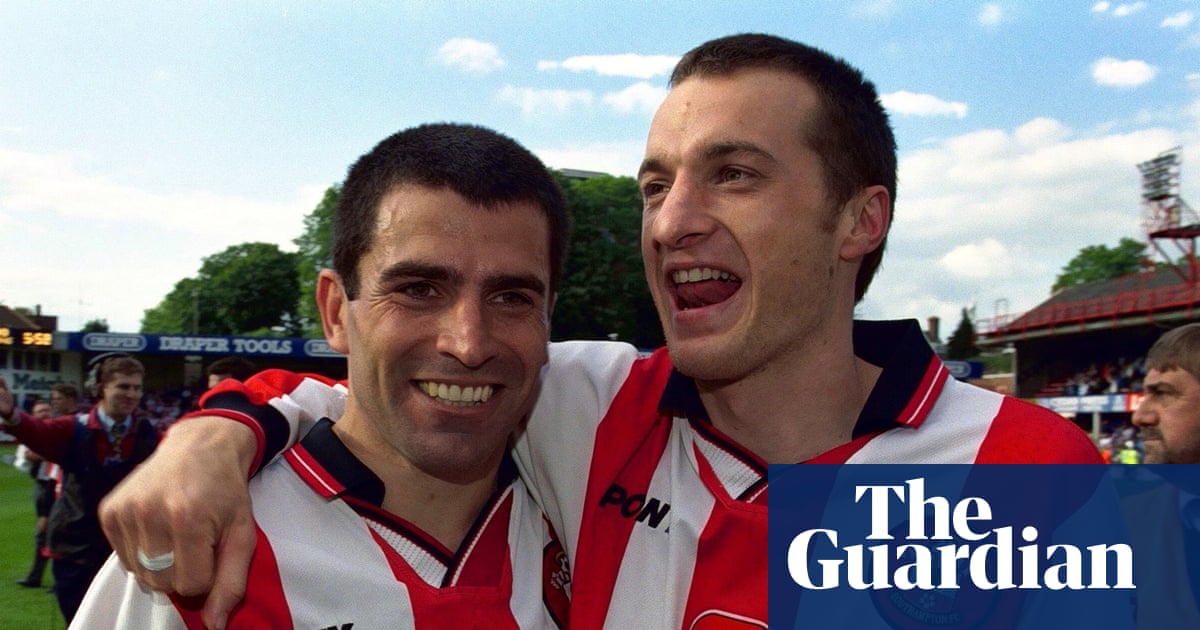
While we've examined players notorious for their own goals before, we haven't focused on those who finished their careers in the negative. Southampton's beloved Francis Benali is one such case. He managed just one official goal in his career, famously scoring a stunning own goal against Oldham in the 1993-94 season. There’s also an OG against Manchester United from the 1999-2000 campaign, but without a full database for Southampton, we may have missed some other moments of misfortune.
Another defender with a similar tale is Riccardo Ferri, a solid presence in Internazionale’s 1988-89 title-winning squad. He racked up six goals alongside eight own goals in Serie A. While he netted three additional goals in cup competitions, our stats focus solely on his league performance.
Jamie Carragher also had an interesting finish to his career, ending with four goals and seven own goals. Notably, he managed to score twice in one match against Manchester United back in 1999. He added another in the 2006 FA Cup final, a match that ended well for Liverpool. While some sources cite Carragher with five goals, the Premier League stats credit one of those as an own goal by Emmanuel Pogatetz.
Sven van Beek holds the title for most own goals in the Eredivisie, with eight to his name over a 12-season span at various clubs, scoring just five goals for his teams. He’s still active in Qatar, where he’s managed to net five goals for Al-Shahania.
Luigi Zannier, a defender from the 1950s and 60s, also finished on a negative note. During his Serie A career, he scored three goals but unfortunately contributed six own goals.
Then there’s Billy Balmer from Everton, who stands out even more. At the turn of the 20th century, he scored eight own goals—his only goal in over 300 appearances was a penalty kick in 1899.
Switching gears, Matt Walker raises another thought: when was the earliest a top-flight team was confirmed to have a trophyless season? The definition of what constitutes a trophy has evolved, especially since Arsène Wenger labeled Champions League qualification as a trophy. However, we’re focusing on actual silverware.
In England, the hope for a trophy often fades by January, particularly after the third round of the FA Cup. Tom Reed points out Bournemouth from last season, who were eliminated from both domestic cups by January 10, leaving them without realistic title hopes.
However, Bournemouth wasn’t yet mathematically out of the title race. Tom’s research reveals that Derby County holds the record for the earliest confirmation of a trophyless campaign in the Premier League, having been knocked out of the League Cup on August 28 and the FA Cup by January 26. Their fate was sealed on February 9, 2008, after a loss to Tottenham.
In other leagues, the timing of cup competitions means some teams realize their trophy aspirations are gone before Christmas. In Italy, the early rounds of the Coppa Italia can spell doom for weaker Serie A teams. Daz Pearce remembers Lecce and Brescia crashing out in September during the 1993-94 and 1994-95 seasons, respectively, leading them to recognize their title chances had vanished long before the season’s end.
It appears both Lecce and Brescia mathematically confirmed their trophyless seasons after 22 of their Serie A games, with Lecce’s date being February 6, 1994, and Brescia’s on March 5, 1995.
In last week’s Knowledge, we discussed players who broke scoring droughts with goals off their backsides. Tom Clarke adds to this with an example from the 2023-24 Championship season. Leeds’ Patrick Bamford found himself in a goal drought, which ended when a shot went in off his backside during a thrilling 4-3 win against Middlesbrough—a humorous moment that brought some relief to the Leeds faithful.
Lastly, there’s a query about the origins of the term ‘shithousery’ and whether other languages have an equivalent. This term captures the essence of the beautiful game in all its chaotic glory.